Chapter 01 / 05 1921 — 1984

Life

Seoul · Nottingham · Sinchon

The eldest son of an independence activist and journalist, he laid the foundations of electrical engineering, from the ground up, in a country that never had enough electricity. Sixty-three years, told in eight parts.

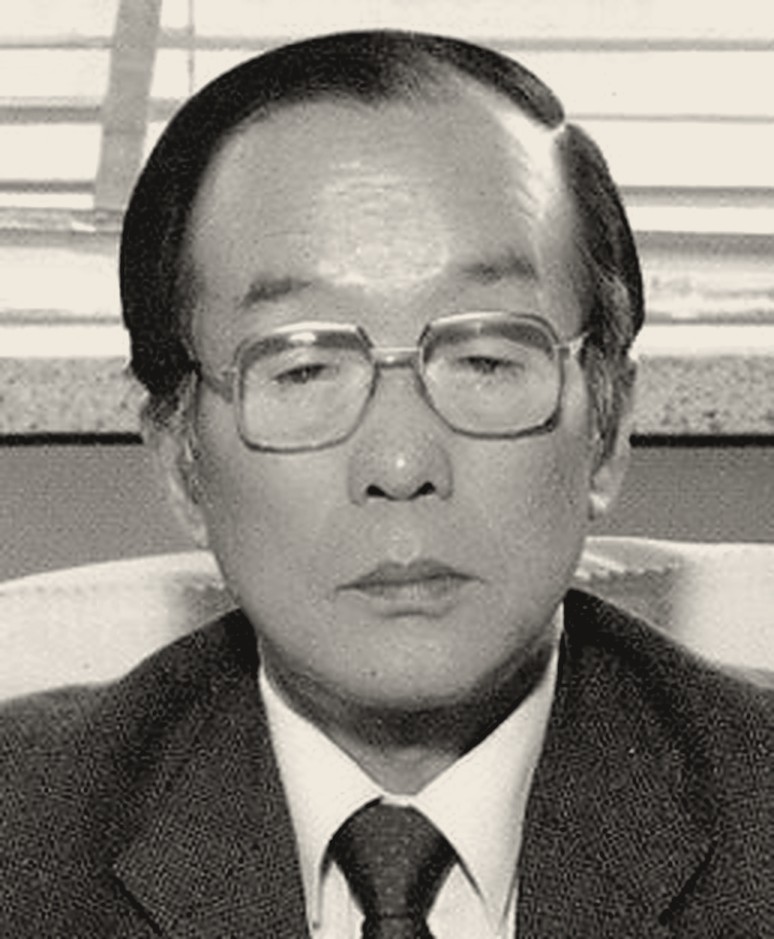
Portrait of Professor Han Man Choon in glasses and a tie
PL. 01 Chun-gang Han Man Choon n.d. Source: Korea Science & Technology Merit
Pen name

His pen name was Chun-gang: “spring hill.”

Born in Seoul in 1921, he died in the summer of 1984. In between, he was a planning chief at a power company, a university professor at twenty-seven and, after researching reactor control in England, the nation’s first doctor of electrical engineering.

He wrote electrical engineering textbooks in Korean, built a computer from discarded parts and calculated the case for changing a country’s voltage. This page follows that path in order.

Chronology

1898
I.1898 — 1941

His Father’s Name

His father, Han Ki-ak, joined the February 8 Declaration of Independence in Tokyo in 1919, distributed the Declaration during the March First Movement, then fled to Shanghai, where he sat in the first Provisional Legislative Assembly of the Provisional Government of the Republic of Korea.

Back home he took up the pen. He helped found the Dong-A Ilbo, became the first editor-in-chief of the Sidae Ilbo and later editor-in-chief of the Chosun Ilbo, and in 1927 was a founding member of the Singanhoe. In 1990 he was posthumously awarded the Order of Merit for National Foundation, Patriotic Medal.

Han Ki-ak1898 — 1941 · Independence activist, journalist
1921
II.1921 — 1943

Born in Seoul

He was born in Seoul on 26 June 1921, the eldest son; his mother was Nam Hui-jeong. Three younger brothers followed: Man-nyeon, Man-jeung and Man-cheong. Han Man-nyeon later founded the publishing house Ilchokak, and Han Man-cheong became director of Seoul National University Hospital.

Known as a prodigy from childhood, he went from Gyeongseong First Higher Common School to the electrical engineering department of Keijō Imperial University’s Faculty of Science and Engineering. In 1941, he lost his father.

1943
III.1943 — 1955

The First Class

In 1943 he graduated with the department’s first class and went straight to the Joseon Electric Power Company, where he served as chief of planning and then of power generation.

After liberation, in 1947, he became a founding member of the Korean Institute of Electrical Engineers. The following year, at twenty-seven, he was appointed professor of electrical engineering at Seoul National University. He later also taught at Chonbuk National University and the Inha Institute of Technology.

1947Founding member, Korean Institute of Electrical Engineers
1955
IV.1955 — 1961

Sinchon, then Nottingham

In 1955 he joined Yonsei University’s College of Science and Engineering as professor of electrical engineering. In 1958 he went to the University of Nottingham as Korea’s first government-funded student in a nuclear-related field.

In 1961 he received his doctorate for research in reactor control, Korea’s first Ph.D. in electrical engineering. The work applied electrical control theory to the stability of nuclear power.

Ph.D., University of Nottingham1961 · Reactor control
1960
V.1960 — 1981

Textbooks in Korean

Until he turned to translating and writing, university lectures in electrical engineering relied on Japanese and American textbooks. Beginning with a translation of AC Circuits in 1960, he published Distribution Engineering (1963), Power Generation Engineering (1964), Power Transmission Engineering, Automatic Control Theory and Exercises in Electrical Theory (1973).

In 1981 came Introduction to Computer Science and Automatic Control Systems: groundwork for a discipline, laid in Korean.

1961
VI.1961

Building the Machine

In 1961, the year of his doctorate, he and his students completed the Yonsei 101 analog computer. It was Korea’s first, built from military surplus parts gathered in the junk shops of Cheonggyecheon.

Its vacuum-tube electronics performed higher calculus in real time. It went on to serve research on power-system stability, controller design and the safety of nuclear power.

Registered Cultural Heritage No. 557See Yonsei 101 →
1973
VII.1970 — 1981

Raising the Voltage

Having brought control-engineering ideas into power systems, in the early 1970s he set out the theoretical case for raising distribution voltage to 220/380 volts. The conversion began in 1973 and was completed thirty-two years later, in 2005.

In the same years he was president of the Korean Institute of Electrical Engineers (1973–1976) and chair of the Korean National Committee of the IEC. He received the Order of Industrial Service Merit (1972), the Seoul Culture Award (1977) and the Order of Civil Merit, Dongbaek Medal (1981).

1984
VIII.1984

5 August

At Yonsei he was the first head of the engineering division, then dean of the College of Science and Engineering, dean of the Graduate School of Industry and director of the Institute of Industrial Technology. He was building the foundations of industry–university cooperation when he died suddenly on 5 August 1984, aged sixty-three.

Two years later, his students founded a prize bearing his pen name.

Offices Held

The posts
he held

From the campus and learned societies to government and industry, his many titles show how long he worked to widen the base of science and technology in Korea.

  1. 01First head of the engineering division, Yonsei University
  2. 02Dean, College of Science and Engineering, Yonsei University
  3. 03Dean, Graduate School of Industry, Yonsei University
  4. 04Director, Institute of Industrial Technology, Yonsei University
  5. 05President, Korean Institute of Electrical Engineers
  6. 06Chair, Korean National Committee of the IEC
  7. 07Evaluation Professor, Office of the Prime Minister
  8. 08Technical Committee Chair, Korea Committee for the International Vocational Training Competition
  9. 09Director, Korea Technical Qualification Corporation
  10. 10Adviser, Technology Research Center, Federation of Korean Industries
  11. 11Policy Adviser, Ministry of Energy and Resources
  12. 12Chair, Electrical Section, Standards Council, Industrial Advancement Administration
  13. 13Vice-President, Korean Federation of Science and Technology Societies

Lineage — Three Names

1898 —
Father Han Ki-ak 1898 — 1941

Independence activist and journalist. Member of the first Provisional Legislative Assembly, editor-in-chief of the Chosun Ilbo, founding member of the Singanhoe.

Han Man Choon Han Man Choon 1921 — 1984

Electrical engineer. Korea’s first Ph.D. in electrical engineering; built the Yonsei 101 and made the theoretical case for 220 volts.

Eldest son Han Min-koo Professor Emeritus, Seoul National University

Electrical engineer. He studied electrical engineering at Seoul National University, earned his doctorate at Johns Hopkins University and served as president of the Korean Academy of Science and Technology.